
How to Move Out of a Moldy Home Without Taking the Mold With You

Moving out of a mold-affected home can feel overwhelming.
One of the first questions we hear is:
“What do I do with all of my stuff?”
The good news is that finding mold in your home does not automatically mean you need to throw away everything you own.
Many belongings can be successfully cleaned and moved. Others—particularly heavily padded items, degraded porous materials, and belongings with established mold growth—may be difficult or impractical to adequately clean.
The key is to move strategically.
Instead of packing everything in the affected home, carrying it directly into the new house, and figuring it out later, create a plan that separates cleaned belongings from items that still need to be evaluated or cleaned.

First: Growth vs. Settled Contamination
This distinction matters.
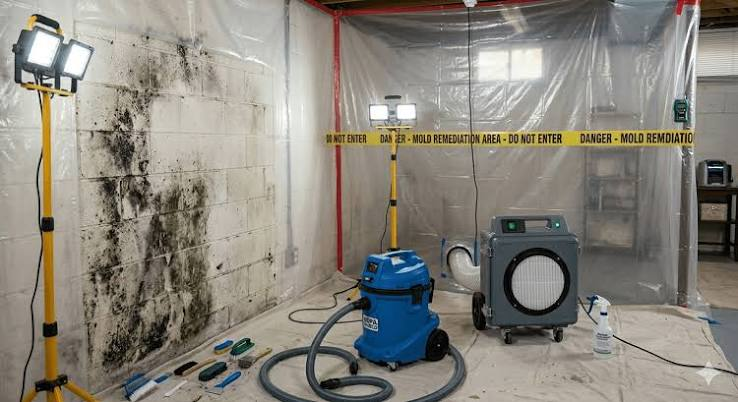
An item with active fungal growth or significant water damage is very different from a hard-surface belonging that simply sat inside a mold-affected house and accumulated household dust and settled fungal particles.
Mold spores and fragments can settle onto belongings just like other particles in household dust.
That means many nonporous and washable belongings don't necessarily need to be discarded—they need to be properly cleaned before entering the clean living space.
Items with visible mold growth, deterioration, persistent odor, or contamination deep within porous materials require more careful consideration.
Create a Staging Area at the New Home
One of the best ways to avoid cross-contaminating a new home is to establish a staging area before the move begins.
Ideally, belongings coming from the affected home should not travel directly from the moving truck into bedrooms, closets, cabinets, and living spaces.
Instead, designate an area where belongings can be:
Evaluated → Cleaned → Dried → Moved into the home
Depending on the property and climate, this might be a garage, covered outdoor area, utility space, or another location that can be kept reasonably separated from the primary living environment.
Think of this as the transition point between the old environment and the new one.
Once an item has been cleaned, keep it separated from belongings that have not yet been processed.
Wash Your Fabrics
Washable fabrics are among the easier belongings to address.
Clothing, towels, sheets, blankets, washable curtains, and similar textiles should be laundered and thoroughly dried before being placed into clean closets and drawers.
Whenever possible, move cleaned laundry directly into clean containers or bags rather than returning it to the affected environment.
The goal is to create a one-way process:
Affected environment → Cleaning → Clean storage → New home
Avoid washing everything and then packing it back into dusty boxes or storing it alongside belongings that haven't been cleaned yet.

Clean Hard, Nonporous Belongings
Glass, metal, finished plastic, sealed surfaces, dishes, and many other nonporous belongings can generally be physically cleaned.
Remember one of our most important principles:
Removal matters more than simply trying to “kill” mold.
Wiping away settled dust, spores, fragments, and residue physically removes contamination from the item.
Depending on the object, this may involve damp wiping, washing with detergent and water, or HEPA vacuuming followed by appropriate surface cleaning.
Pay attention to seams, grooves, undersides, vents, and other areas where dust collects.
What About Electronics?
Electronics require a little more thought because many can't simply be washed.
Start with the exterior surfaces and accessible areas. HEPA vacuuming and careful wiping can remove settled dust from many items.
However, electronics with cooling fans can draw substantial amounts of household air—and dust—through their internal components.
Computers, gaming systems, televisions, air purifiers, and other fan-driven electronics may therefore require additional evaluation or professional cleaning, particularly when they were located near a significant source of contamination.
Never introduce liquids into electronic components unless the manufacturer's cleaning instructions specifically allow it.
Heavily Padded Items Are More Difficult
This is where some harder decisions may need to be made.
Items such as:
Mattresses
Heavily upholstered furniture
Fabric recliners
Padded headboards
Some pillows and cushions
Other thick, difficult-to-access porous materials
can be challenging because particles can penetrate beyond the surface into areas that cannot be easily inspected or physically cleaned.
If a heavily padded item was located in a significantly affected environment—particularly if it has visible growth, water damage, or a persistent musty odor—replacement may be the more practical option.
This doesn't mean every couch or mattress from a home with mold automatically belongs in a dumpster.
Location, exposure, condition, value, cleanability, and the sensitivity of the people who will be using it should all be considered.
Degraded Porous Materials Are Often Not Worth Saving
Porous belongings deserve particular attention when the material itself has begun to deteriorate.
Cardboard, particleboard, unfinished fiberboard, paper products, damaged books, wicker, unfinished wood, and similar materials can be difficult to clean when mold has established itself within the material.
If an item is visibly colonized, water-damaged, deteriorating, or cannot be adequately cleaned, disposal may make more sense than attempting to salvage it.
Cardboard moving boxes deserve special mention.
Whenever possible, avoid carrying old, dusty cardboard boxes from a significantly mold-affected environment directly into the new home. Clean plastic totes can be a useful alternative for items that have already been processed.
Don't Forget the Things That Collect Dust
Sometimes it's not the obvious belongings that cause problems.
Think about items with lots of surface area or small spaces where dust accumulates:
Books, artificial plants, baskets, decorative items, toys, fans, lamp shades, storage bins, shoes, small appliances, vacuum cleaners
These items don't necessarily need to be discarded, but they shouldn't be overlooked simply because there isn't visible mold growing on them.
Dust is one of the primary vehicles by which fungal particles move around an indoor environment.
Removing that dust is an important part of reducing what you carry into the next home.
Be Careful With Your Vacuum Cleaner
Your vacuum has spent its life collecting dust from the old environment.
If you're moving because of a significant mold problem, don't automatically roll the old vacuum into your freshly cleaned house and start using it.
Evaluate the vacuum itself.
Replace filters and bags when applicable and thoroughly clean accessible components according to the manufacturer's instructions. In some situations—particularly with heavily contaminated or difficult-to-clean vacuums—replacement may be worth considering.
And for environmental cleaning, a true HEPA-filtered vacuum is preferred.
Your Moving Vehicle Matters Too
Here's an easy step to overlook.
If uncleaned belongings are loaded into a moving truck or trailer and then your cleaned belongings are placed into that same dusty environment, you can partially undo the work you've already done.
Whenever possible, clean the cargo area before loading processed belongings and separate cleaned items from unprocessed ones.
The same principle applies throughout the move:
Keep clean things clean.
Don't Turn the New Home Into the Cleaning Zone
This may be the most important logistical piece of the entire process.
Avoid carrying everything into the new house with the intention of cleaning it later.
Once dusty belongings are opened, unpacked, sorted, shaken out, and cleaned inside the home, particles can become redistributed throughout the new environment.
That's exactly what the staging area is designed to prevent.
Process belongings before they enter the primary living space whenever reasonably possible.
What If Someone Is Extremely Mold-Sensitive?
The level of precaution appropriate for one household may be very different from another.
A family moving because mold was discovered underneath one bathroom sink may not need the same belongings protocol as someone leaving a home with widespread contamination, significant water damage, or extensive HVAC involvement.
Likewise, households containing someone who is particularly sensitive to the affected environment may choose to be more conservative about what they bring.
There is no responsible universal list that says:
“Keep these 20 things and throw away everything else.”
The extent and location of contamination matter.
You Don't Have to Throw Away Your Life
Moving because of mold is stressful enough without being told that every possession you've accumulated has to go too.
For many belongings, cleaning is completely reasonable.
For others, particularly heavily padded, visibly colonized, water-damaged, or degraded porous items, replacement may be the safer and more practical choice.
The goal isn't perfection.
The goal is to substantially reduce the amount of contamination transferred from the affected environment into the new one.
Create a staging area. Clean before unpacking. Wash your fabrics. Physically remove dust and debris. Separate clean belongings from unprocessed belongings. Be selective with difficult-to-clean porous materials.
Most importantly, don't allow fear to make every decision for you.
A thoughtful belongings plan can help you leave the mold problem behind without leaving your entire life behind with it.
The Great Indoors | Education Over Fear
At The Great Indoors, we believe mold decisions should be based on the building conditions, the extent of contamination, the cleanability of the material, and the needs of the people living in the home—not blanket rules or fear.
When you're leaving a mold-affected environment, the question isn't simply “Was this item in the house?”
A better question is: “Can this item be effectively cleaned before it enters the new environment?”

Comments