
Mold, Mycotoxins & Oxidative Stress: What the Science Shows
When we talk about mold in the home, the conversation often centers around spores: How many are present? Are they viable? What species were found?
But mold exposure is more complex than spores alone.
Actively growing fungi can produce a variety of biological materials and metabolites. Among the most studied are mycotoxins—secondary metabolites produced by certain fungi that have well-documented biological effects under sufficient exposure conditions.
One area receiving particular attention is the relationship between mycotoxins, oxidative stress, and mitochondrial function.

What Is Oxidative Stress?
Our cells naturally produce reactive oxygen species (ROS) during normal metabolism. Mitochondria—the structures responsible for producing much of our cellular energy—are one important source.
ROS aren't inherently harmful. In appropriate amounts, they're involved in normal cellular signaling and immune function.
Our bodies also have sophisticated antioxidant systems—including glutathione, superoxide dismutase (SOD), catalase, and NADPH-dependent systems—that help keep these reactive molecules under control.
Oxidative stress develops when that balance shifts:
ROS production > antioxidant capacity
When sustained, excessive oxidative stress can damage cellular proteins, lipids, DNA, and mitochondria.
Where Do Mycotoxins Fit In?
Toxicology research has demonstrated that certain mycotoxins can increase oxidative stress and interfere with mitochondrial function.
Depending on the specific mycotoxin and experimental model, researchers have observed:
Increased ROS production
Altered mitochondrial membrane potential
Reduced ATP production
Changes in mitochondrial respiration
Disruption of antioxidant defenses
Activation of inflammatory and cellular stress pathways
Mycotoxins such as ochratoxin A and several trichothecenes have been particularly well studied for these effects.
This research gives us an important biological connection:
Mycotoxin exposure → increased oxidative stress → mitochondrial stress → altered cellular function
However, there is an important distinction. Much of our mechanistic knowledge comes from toxicology, cell-culture, animal, dietary, and occupational research. Determining the dose and clinical significance of chronic mycotoxin exposure specifically from a water-damaged home remains a developing area of research.
That doesn't mean we should ignore the possibility of environmental exposure. It means we should investigate it thoughtfully.
What Does This Have to Do With Your Home?
Certain molds found in water-damaged buildings are capable of producing mycotoxins under appropriate environmental conditions.
And mycotoxins aren't mold spores.
They are chemical compounds produced by fungi, which means simply killing or rendering mold non-viable doesn't necessarily remove everything associated with fungal contamination.
A mold-affected environment may contain a complex mixture of spores, fungal fragments, allergens, microbial metabolites, and potentially mycotoxins.
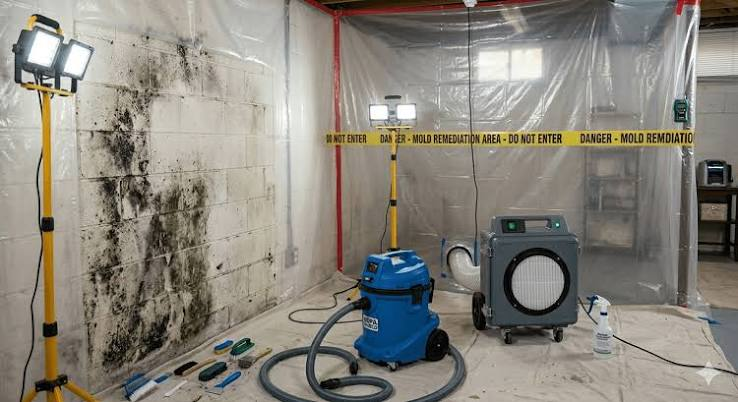
This is one reason proper remediation focuses heavily on source removal and physical cleaning, rather than simply applying a product intended to kill mold.
It's also why investigating the environment can be valuable when someone is experiencing unexplained symptoms and there is reason to suspect a moisture or mold problem in the home.
Finding mold doesn't prove that it caused someone's symptoms—and symptoms alone can't tell us whether a building has a mold problem.
The person and the building need to be evaluated independently, and then the pieces can be considered together.
The Bigger Picture
We still have much to learn about how chronic, low-level environmental exposures interact with individual susceptibility.
But we already know something important:
Mold is more than a spore count.
Fungi can produce biologically active compounds. Certain mycotoxins have demonstrated effects on oxidative stress and mitochondrial function. And when fungal contamination exists inside a building, identifying the moisture source and physically removing contamination matters.
If you suspect your home may be contributing to an ongoing exposure, don't start by guessing which mold—or which toxin—is responsible.
Start by understanding the environment.
A comprehensive mold assessment can help identify hidden moisture conditions, fungal reservoirs, HVAC involvement, and other building conditions that may be contributing to ongoing exposure.
Concerned there may be more happening in your home than you can see? Contact The Great Indoors to schedule a comprehensive mold inspection and start looking for the source.
Environmental assessment is not medical diagnosis or treatment. Health concerns should be evaluated with an appropriately qualified healthcare provider.


Comments