
New Construction Mold Inspections | Prevent Mold Before Move-In
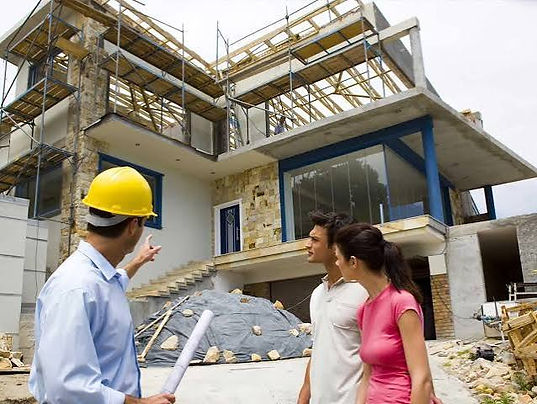
A brand-new home shouldn't start its life with a mold or moisture problem.
Unfortunately, new construction is uniquely vulnerable to both.
Framing lumber can arrive with elevated moisture or existing fungal growth. Building materials may be exposed to rain before the home is dried in. Poor drainage can direct water toward the foundation. Air and water leaks can become hidden behind insulation and drywall. And once the HVAC system begins operating, problems with humidity, ventilation, condensation, or air distribution can emerge.
Many of these conditions become significantly harder—and more expensive—to address once construction is complete.
That's why our approach to new construction mold inspections doesn't begin after the home is built.
It begins while the home is being built.
Mold Prevention Starts Before Construction
Our New Construction Mold & Moisture Inspection Program begins with a meeting with the builder or construction team.
The goal isn't to interfere with the construction process. It's to work collaboratively to reduce moisture and microbial problems before they happen.
We discuss practical construction-site strategies such as:
Inspecting incoming lumber and other materials for visible fungal growth, water damage, and elevated moisture
Recognizing materials that should be rejected rather than incorporated into the home
Keeping lumber, drywall, and other moisture-sensitive materials elevated and properly protected during storage
Allowing wet building materials adequate time to dry before enclosure
Maintaining ventilation throughout construction
Using temporary dehumidification when environmental conditions warrant it
Keeping construction debris and organic material out of wall, floor, and ceiling cavities
Protecting HVAC equipment and ductwork from construction dust, debris, and moisture
We can also discuss building-science considerations that may improve the home's long-term ability to manage moisture.
Depending on the home's design and climate, these conversations may include crawlspace encapsulation, attic and roof assemblies, insulation strategies, HVAC and duct placement, bathroom and kitchen exhaust, dedicated dehumidification, and balanced fresh-air ventilation such as ERVs.
Every home is different.
The goal is to think about how water, heat, humidity, and air will move through this particular building before those systems become difficult or expensive to change.
Inspection #1: Framing, Lumber & Drainage

Our first new construction mold inspection occurs during the framing stage.
At this point, much of the home's structure remains exposed, giving us an opportunity to evaluate materials before they're hidden behind finished assemblies.
We inspect framing lumber for visible or suspected fungal growth, staining, water exposure, and elevated moisture conditions that could indicate materials aren't drying appropriately.
But we don't stop at the lumber.
The property itself is part of the home's moisture-management system.
We evaluate drainage and site conditions for concerns such as water being directed toward the foundation, inadequate grading, areas where water may collect, and other conditions that could contribute to future crawlspace, foundation, or building-envelope moisture.
Finding these problems now provides something incredibly valuable:
Time to correct them.
Inspection #2: Before Insulation and Drywall
This may be one of the most valuable opportunities during the entire construction process.
Our second inspection occurs before insulation and drywall are installed.
Once those materials go up, much of the structure becomes inaccessible.
At this stage, our inspection looks for:
Framing or sheathing that remains unusually wet
Localized pockets of moisture
Evidence of fungal growth
Air gaps and unsealed penetrations
Potential water-intrusion pathways
Defects or breaches in the building envelope
Areas where condensation may be more likely to develop
Plumbing or mechanical conditions that could introduce moisture
Building materials that may not be sufficiently dry to safely enclose
We also pay close attention to penetrations around windows, doors, plumbing, electrical components, and mechanical systems.
A small gap during construction may seem insignificant.
After the home is completed, that same gap can become a pathway for humid outdoor air, uncontrolled air movement, condensation, water intrusion, and energy loss.
The objective is simple:
Don't seal a moisture problem inside the house.
Inspection #3: Evaluating the Finished Home

Our final inspection occurs once the home is substantially complete.
Now we're no longer evaluating individual building materials alone.
We're looking at how the finished home functions as a system.
We reassess the building envelope, moisture conditions, drainage, and grading while evaluating the indoor environment and mechanical systems for conditions that could contribute to future moisture or mold problems.
Depending on the home's design, this may include evaluating:
Indoor relative humidity
Temperature and dew-point relationships
Moisture conditions
HVAC operation and air distribution
Ventilation
Bathroom and kitchen exhaust
Areas vulnerable to condensation
Indoor CO₂ patterns that may indicate inadequate ventilation or poor air distribution
Crawlspace and attic conditions
Exterior drainage and grading
Evidence of water intrusion
Suspected microbial growth
A new home can look beautiful and still have building-performance problems.
High humidity, inadequate ventilation, HVAC imbalance, duct leakage, poor air sealing, or an overlooked moisture source may not be obvious during a traditional new-home walkthrough.
That doesn't make them unimportant.
Why Does a New Home Need Three Mold Inspections?
Because you're essentially looking at three different houses.
During framing, we can see the lumber and structural materials.
Before drywall and insulation, we can see inside the assemblies that will soon disappear.
At completion, we can evaluate how the finished building actually performs.
No single inspection provides all three perspectives.
Our goal isn't to create a perfectly sterile house. Mold spores naturally exist in indoor and outdoor environments.
Instead, we're trying to prevent the conditions that allow persistent moisture and fungal colonization to develop.
That means paying attention to four things throughout construction:
WATER • MOISTURE • AIR • MATERIALS
Control those four variables well, and you've addressed many of the conditions that eventually lead to mold problems.
Why Traditional New-Home Inspections May Not Be Enough
Traditional home inspections serve an important purpose, but they're not necessarily designed to perform a detailed investigation of fungal growth, material moisture, microbial reservoirs, humidity dynamics, or building-science conditions associated with mold development.
Likewise, waiting until the final walkthrough means many of the home's most important areas are already hidden.
By that point, insulation is installed.
Drywall is finished.
Flooring is down.
Cabinetry is installed.
The HVAC system is operating.
If a moisture problem was enclosed during construction, identifying and correcting it can suddenly become much more invasive.
That's why we believe mold and moisture assessment should occur alongside the construction process rather than only after it.
The Best Mold Remediation Is the One You Never Need
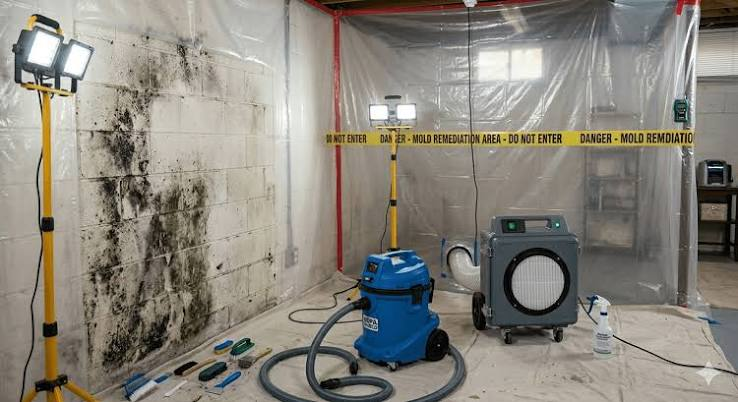
Once a moisture or mold problem is sealed behind drywall, remediation may require opening finished walls, removing insulation, replacing materials, addressing contaminated cavities, or disturbing an otherwise completed home.
During construction, that same problem might mean replacing a piece of lumber, improving an air seal, correcting drainage, drying wet materials, or simply delaying enclosure until moisture levels normalize.
That's the philosophy behind our New Construction Mold & Moisture Inspection Program:
Find small problems while they're still small.
Our three-stage approach combines mold assessment, moisture mapping, building science, and indoor environmental evaluation to identify vulnerabilities while they can still be addressed.
We can't promise that any home will never experience a moisture or mold problem.
But we can help give a new home a better starting point.
Build it once. Build it dry. Build it with the future indoor environment in mind.
Building a New Home?
Don't wait until move-in to find out what's happening behind the walls.
The Great Indoors' three-stage New Construction Mold & Moisture Inspection Program follows your home through critical stages of construction—from exposed framing and pre-drywall assessment to evaluation of the finished indoor environment.
Whether you're building your forever home or simply want another set of trained eyes on one of the largest investments you'll ever make, prevention is easier than remediation.
Contact The Great Indoors to learn more about our New Construction Mold & Moisture Inspection Program and how we can work alongside your builder from framing through completion.
New construction mold and moisture inspections are supplemental environmental assessments and do not replace required municipal, code, engineering, structural, HVAC, or traditional home inspections.


Comments